10 High-ROI Conversational AI Agent Use Cases Every Business Should Know

Businesses have been talking about artificial intelligence for years. But for most organizations, the conversation stayed abstract for a long time. The technology felt either too complex, too expensive, or too removed from day-to-day operations to act on.
That has changed significantly. Conversational AI agents have moved from experimental to operational, and the businesses deploying them are seeing measurable returns across functions that were previously either heavily staffed or chronically underserved.
This is not about replacing people or chasing a technology trend. It is about identifying where AI agents can handle high-volume, repeatable, or time-sensitive interactions at a scale and consistency that human teams simply cannot match, and deploying them with enough strategic intent to generate genuine ROI.
Here are ten use cases where conversational AI agents are delivering the most concrete business value right now.
What Are Conversational AI Agents?
Before getting into the use cases, it is worth being precise about what we mean.
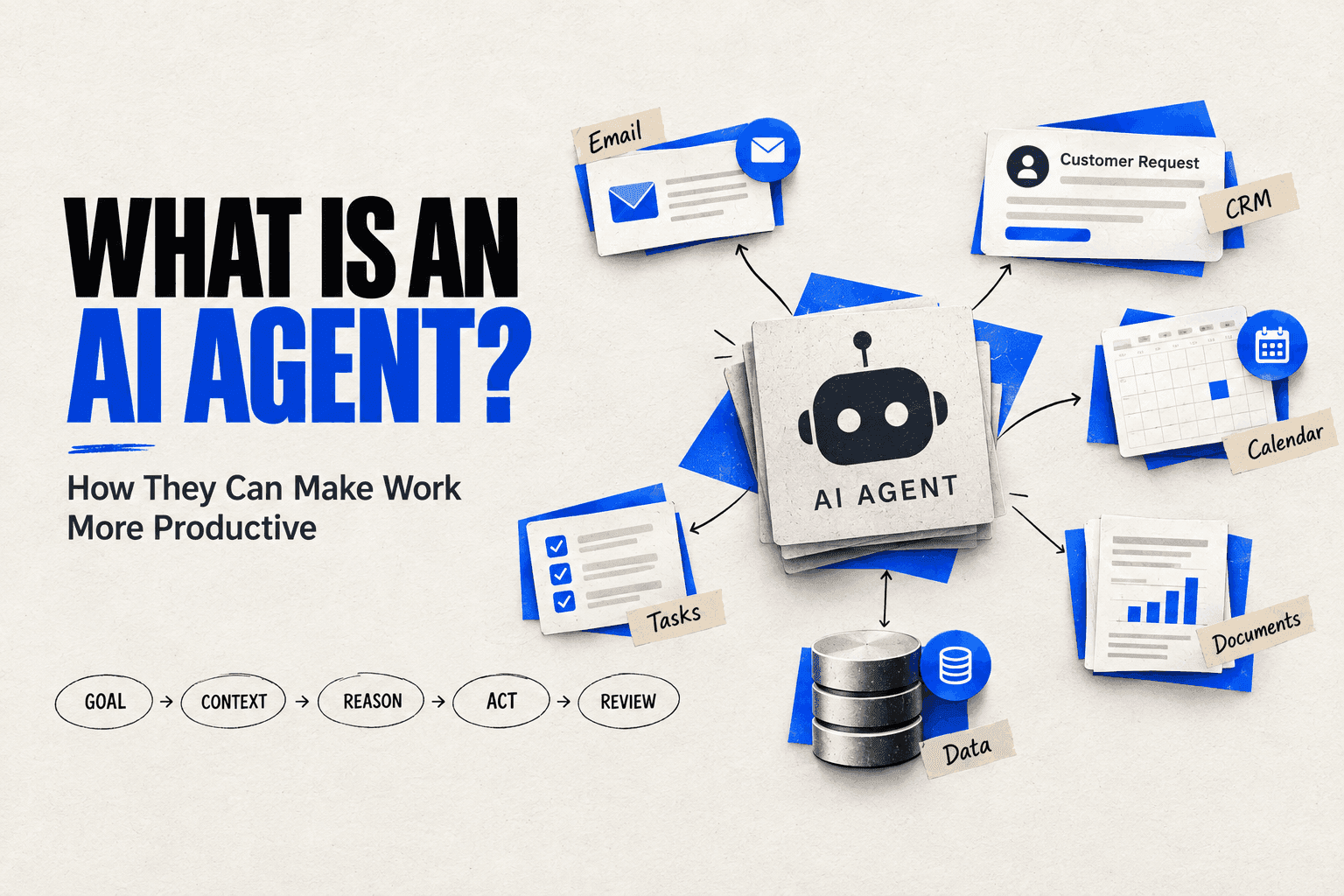
Conversational AI agents are software systems capable of understanding natural language, processing context, and responding in ways that feel coherent and useful to the person on the other end. They go beyond simple chatbots with scripted response trees. Modern AI agents can handle nuanced questions, retain context within a conversation, escalate intelligently to human agents when needed, and integrate with backend systems to take action, not just respond.
The distinction matters because many businesses that tried basic chatbots five or six years ago came away unimpressed. What exists today is categorically more capable, and the ROI case is built on that capability gap.
1. Customer Support at Scale
This is the most widely deployed use case, and for good reason. Customer support is expensive, volume-variable, and heavily dominated by a relatively small set of repeating questions.
AI agents for customer support can handle order status inquiries, returns and refund requests, product questions, account management, and troubleshooting with a consistency and speed that human teams cannot match at scale. For ecommerce businesses in particular, where support volume spikes dramatically during sales periods and holiday seasons, this is a direct operational cost lever.
The ROI comes from two directions simultaneously. First, the cost per interaction drops significantly when AI handles tier-one queries. Second, human agents are freed to handle the complex, sensitive, or high-value interactions where their judgment and empathy genuinely matter.
The key to making this work is not replacing support teams entirely. It is designing a system where AI handles what it is well-suited for and hands off appropriately when it is not.
2. Lead Qualification and Nurturing
Every business with an inbound marketing function faces the same problem. Leads arrive at different stages of readiness, from different channels, with varying levels of intent. Qualifying them manually is time-consuming. Leaving them unattended until a sales representative is available costs conversions.
AI agents for lead generation solve this by engaging prospects the moment they express interest. A visitor who fills out a contact form or starts a chat on a pricing page can be immediately engaged with qualifying questions that assess their needs, budget, timeline, and fit. The agent gathers structured information, routes high-intent leads to sales immediately, and nurtures lower-intent leads through relevant content or follow-up sequences.
This is not just about speed, though speed absolutely matters. Research consistently shows that the probability of qualifying a lead drops significantly within the first hour of initial contact. An AI agent that responds instantly, at any time of day, captures intent before it fades.
3. Ecommerce Product Discovery and Recommendation
For ecommerce businesses with large catalogues, product discovery is a genuine conversion problem. Users who cannot find what they are looking for quickly simply leave. Navigation and search help, but they require users to know what they want. An AI agent can have a conversation.
A well-designed conversational AI agent for ecommerce acts as a virtual shopping assistant. It asks about use case, preferences, budget, and constraints, and guides users to products that actually match their needs. This personalized discovery experience mirrors what a knowledgeable in-store sales associate does, at scale and without the overhead.
The conversion impact is measurable. Users who receive personalized guidance convert at higher rates and with higher average order values than those navigating catalogues independently.
4. Appointment Booking and Scheduling
For service businesses, clinics, agencies, consultancies, and any organization that works through scheduled interactions, the booking process is often a friction-heavy experience involving back-and-forth emails, missed calls, and manual calendar management.
An AI agent integrated with scheduling systems can handle the entire booking interaction conversationally. A prospect expresses interest, the agent checks availability, confirms the appointment, sends confirmation details, and follows up with reminders, all without human involvement.
This use case is deceptively simple but generates meaningful ROI. Reducing the friction between intent and appointment significantly increases the conversion rate from inquiry to booked call. For businesses where a single new client relationship has significant lifetime value, even marginal improvements in that conversion rate matter enormously.
5. Post-Purchase Engagement and Retention
Acquiring a customer is only the beginning of the value relationship. What happens after purchase, the onboarding experience, the follow-up, the cross-sell opportunity, and the re-engagement if activity lapses, determines lifetime value far more than acquisition alone.
Conversational AI agents are well-suited to post-purchase engagement because these interactions follow predictable patterns. Delivery updates, product usage guidance, review requests, loyalty program communications, and win-back sequences can all be handled through AI-powered conversations that feel personal without requiring individual human attention.
For subscription businesses or brands with high repurchase potential, this use case directly impacts retention rates and customer lifetime value, two metrics that compound over time in ways that acquisition metrics alone cannot replicate.
6. Internal Knowledge Management and Employee Support
Conversational AI use cases are not limited to customer-facing applications. The same capability that makes AI agents effective for external users applies equally to internal audiences.
Large organizations carry enormous amounts of institutional knowledge across documentation, policies, processes, and systems that employees need to access regularly. Finding the right information is often time-consuming, and the friction compounds across a workforce of any meaningful size.
An internal AI agent trained on company knowledge bases can answer employee questions instantly. HR policy queries, IT troubleshooting steps, onboarding guidance, compliance requirements, and operational procedures can all be surfaced conversationally, reducing the load on support functions and getting employees the information they need faster.
The productivity gains here are real but often underestimated because they are distributed across the organization rather than concentrated in a single function.
7. Abandoned Cart Recovery
Cart abandonment is one of the most significant conversion leaks in ecommerce. The global average abandonment rate consistently sits above 70 percent, meaning that the majority of users who demonstrate enough intent to add a product to a cart never complete the purchase.
Traditional abandoned cart recovery relies on email sequences. These work to a degree, but they are passive, they arrive after the moment of intent has passed, and their effectiveness declines over time as users grow accustomed to them.
A conversational AI agent can intervene more actively and more personally. A user who begins to exit a checkout flow can be engaged with an immediate conversational prompt that addresses the most common abandonment reasons, whether that is a pricing concern, a shipping question, a discount inquiry, or simply a distraction that needs a gentle redirect.
The timing and personalization available through AI-driven cart recovery represents a meaningful improvement over static email sequences for businesses with significant ecommerce volume.
8. Multilingual Customer Engagement
For businesses operating across multiple markets or serving linguistically diverse customer bases, language has historically been a significant support and engagement barrier. Building multilingual human support teams is expensive. Relying on machine translation for written communications often produces results that feel impersonal or inaccurate.
Modern conversational AI agents can engage fluently across multiple languages, providing native-language support experiences without the overhead of a proportionally larger multilingual team.
For ecommerce brands expanding into new geographies, or for any business serving multicultural urban markets, this capability removes a real friction point from the customer experience. The ROI manifests in both cost efficiency and conversion improvement in markets that were previously underserved.
9. Sales Enablement and Objection Handling
In high-consideration purchase categories, prospects often have questions and objections that sit between the marketing content they have already consumed and the sales conversation they are not yet ready to initiate. This gap is where many potential customers quietly disengage.
A conversational AI agent positioned at this stage of the funnel can engage prospects on the specific concerns that are holding them back. Pricing questions, competitive comparisons, technical specifications, implementation concerns, and ROI calculations can all be addressed conversationally, in the moment, without requiring a sales representative to be available.
This use case works especially well when the AI agent is given access to relevant case studies, product documentation, and ROI frameworks. The output is a prospect who arrives at the sales conversation better informed, more confident, and further along in their decision process, which shortens sales cycles and improves close rates.
10. Proactive Customer Outreach
Most AI agent deployments are reactive: a user initiates, the agent responds. But some of the highest-ROI applications are proactive, where the agent initiates the conversation based on a trigger or behavioral signal.
Examples include:
- A user who has visited a pricing page three times in a week receiving a proactive chat prompt offering to answer questions
- A subscription customer approaching renewal receiving a proactive engagement about their plan and options
- A customer who has not purchased in a defined period receiving a re-engagement message via chat or messaging app
- A user who has spent significant time on a product page without adding to cart being offered assistance or a relevant incentive
How conversational AI agents improve ROI through proactive outreach is partly about timing: reaching users at moments of high intent or high risk, rather than waiting for them to reach out. It is also about volume: the same proactive strategy can be executed across thousands of users simultaneously without proportional increases in resource requirements.
Measuring Conversational AI ROI: What to Track
Deploying AI agents without a measurement framework is a common mistake. The ROI is real, but it needs to be defined before deployment rather than assessed vaguely afterward.
Depending on the use case, the right metrics will vary. For customer support deployments, track cost per resolution, first-contact resolution rate, and escalation rate. For lead qualification, track time to first response, lead-to-opportunity conversion rate, and pipeline velocity. For ecommerce applications, track conversion rate lift, average order value, and cart abandonment recovery rate.
The businesses that realize the strongest conversational AI ROI are those that instrument their deployments carefully, iterate based on real interaction data, and treat the AI agent as a system to be refined continuously rather than a tool to be deployed and forgotten.
How to Choose the Right Use Cases for Your Business
Not every use case on this list will be equally relevant to every business. The right starting point depends on where your current operational friction is highest and where AI-driven improvement would have the most direct impact on revenue or cost.
For most businesses, starting with a single, well-defined use case and building from demonstrated success is more effective than attempting to deploy across multiple functions simultaneously. Customer support and lead qualification tend to offer the fastest path to measurable ROI because the baseline metrics are easy to define and the improvement is straightforward to attribute.
As the operational confidence and technical integration mature, expanding into more sophisticated use cases like proactive outreach, post-purchase engagement, and sales enablement becomes both easier and more impactful.
FAQ: Conversational AI Agents and Business ROI
What are conversational AI agents?
Conversational AI agents are software systems that understand natural language, maintain context within interactions, and respond in ways that are coherent and useful. They go beyond scripted chatbots by handling nuanced queries, integrating with backend systems, and escalating to human agents when appropriate.
What are the main use cases of conversational AI for business?
The highest-ROI use cases include customer support automation, lead qualification, ecommerce product discovery, appointment scheduling, post-purchase engagement, internal knowledge management, abandoned cart recovery, multilingual support, sales enablement, and proactive outreach.
How do conversational AI agents improve ROI?
They reduce the cost per customer interaction, increase the speed of response to high-intent prospects, improve conversion rates at key stages of the customer journey, and free human teams to focus on higher-value activities. The ROI accumulates across reduced operational costs and improved revenue performance simultaneously.
Are AI agents suitable for small businesses?
Yes. Many conversational AI platforms are accessible at price points that make sense for smaller businesses, and the ROI from even a single well-deployed use case can justify the investment. Lead qualification and appointment booking tend to offer the strongest starting points for smaller operations.
What is the difference between a chatbot and a conversational AI agent?
Traditional chatbots follow scripted decision trees and can only handle queries that match predefined patterns. Conversational AI agents understand natural language, maintain context across a conversation, handle variation and nuance, and can integrate with external systems to take action rather than just provide information.
How long does it take to see ROI from conversational AI?
For customer support and lead qualification use cases, measurable ROI is typically visible within the first one to three months of deployment. More complex use cases involving deeper system integration may take longer to instrument and optimize before results become clear.
Conclusion: AI Agents Are a Business Infrastructure Decision
The businesses that are building the most durable competitive advantages with conversational AI are not doing so by chasing novelty. They are doing so by identifying specific, high-value functions where AI-driven engagement outperforms the manual alternative, deploying with clear measurement frameworks, and compounding their learning over time.
Conversational AI agents are not a replacement for human judgment, creativity, or relationship-building. They are an infrastructure layer that handles scale, speed, and consistency in ways that free human effort for what it does best.
The question for any business leader is not whether AI agents are worth deploying. At this stage of the technology's maturity, the evidence for ROI across the use cases covered here is substantial. The question is where to start, how to measure success, and how to build organizational capability around the deployment.
If your business is evaluating where AI agents fit within a broader digital strategy, that evaluation benefits from a clear-eyed assessment of your current operational gaps and growth priorities. Webmaffia works with businesses navigating exactly this kind of strategic decision, combining digital strategy, website development, SEO, and content marketing into integrated growth programs built around where a business actually is and where it needs to go.
Talk to Webmaffia about building a digital infrastructure that performs.
following blog articles.