GEO vs SEO: What’s the Difference and Do You Need Both?
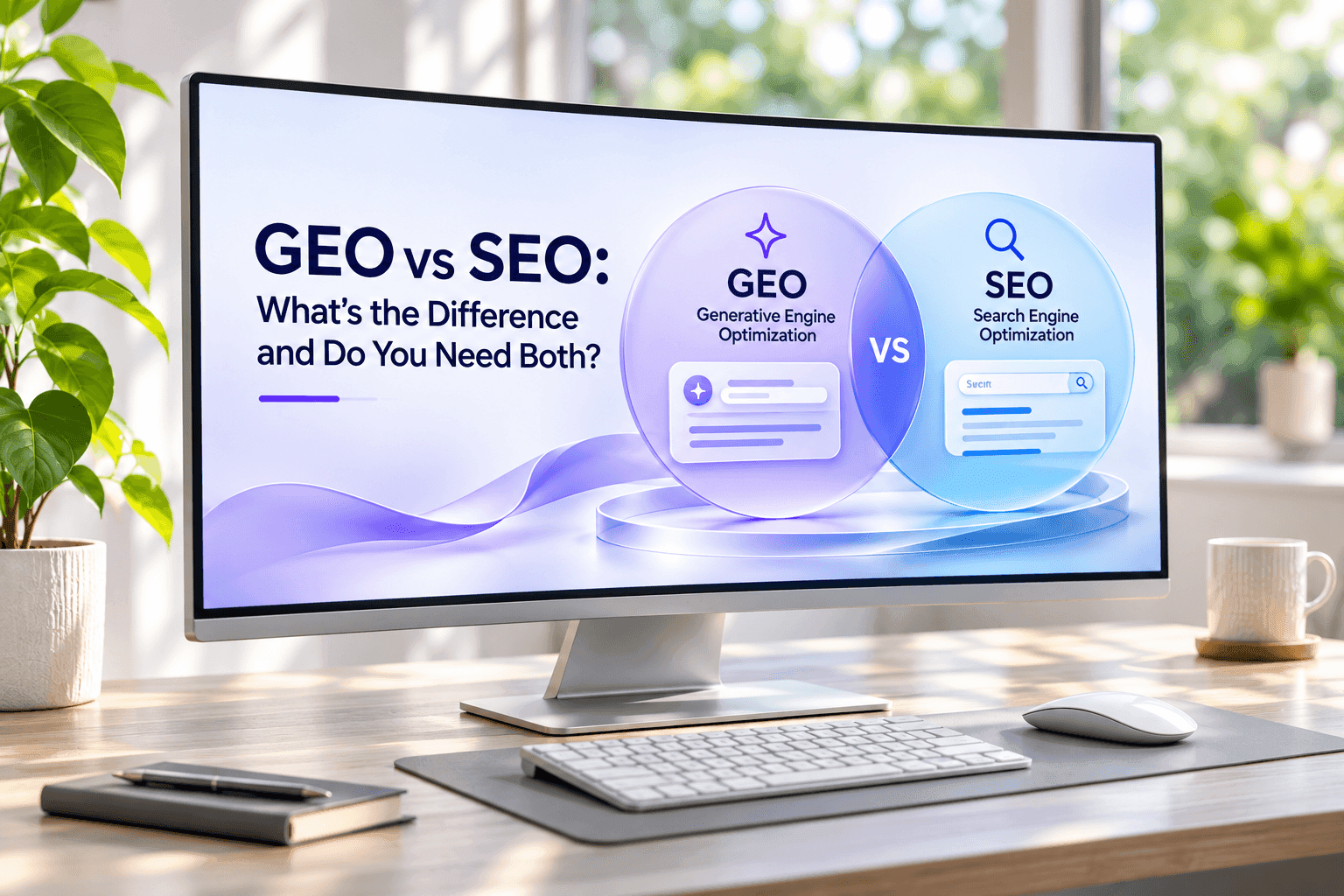
The GEO vs SEO question comes down to this: they are related but different disciplines, and most businesses benefit from both. SEO helps your pages rank in search results. GEO helps AI tools understand, trust, and cite your content in their answers. This guide is for business owners and marketers who want to know how the two compare, where they overlap, and how to plan for both.
What Is SEO?
Search engine optimization (SEO) is the practice of improving a website so it ranks higher in search results and attracts relevant visitors. It combines technical health, useful content, and authority signals so that search engines like Google can find, understand, and recommend your pages.
What SEO focuses on (rankings, clicks, and website traffic)
SEO is built around a simple chain: rank for the queries your customers use, earn the click, and turn that visit into an enquiry or sale. Its core work covers keyword research, on-page optimisation, technical fixes, content, and link building. Success is usually judged by rankings, organic traffic, and conversions.
What Is GEO (Generative Engine Optimization)?
Generative engine optimization (GEO) is the practice of structuring and strengthening your content so generative AI tools can understand it, trust it, and cite or mention it when they answer questions. Instead of competing for a position in a list of links, you compete to be part of the answer.
Which platforms GEO targets (Google AI Overviews, ChatGPT, Gemini, Perplexity, and Copilot)
GEO applies to any tool that generates answers from multiple sources. That includes Google AI Overviews, ChatGPT, Gemini, Perplexity, and Microsoft Copilot. Each pulls from the web differently, but all of them favour content that is clear, credible, and easy to extract.
What GEO focuses on (citations, brand mentions, and being used in AI-generated answers)
GEO prioritises being cited as a source, being named in recommendations, and having your information reflected accurately in AI-generated responses. For a buyer researching vendors, a mention inside an AI answer can shape the shortlist before they ever visit a website.
GEO vs SEO: Key Differences
In short, SEO earns visibility through ranked pages, while GEO earns visibility through inclusion in generated answers. The comparison below covers the five areas that matter most.
- Goal: SEO aims for higher rankings and more qualified clicks. GEO aims for citations and accurate brand mentions.
- Where results appear: SEO results appear on search results pages. GEO results appear inside AI answers and summaries.
- Content approach: SEO builds pages around keywords and intent. GEO builds clear answers around questions and entities.
- Success metrics: SEO tracks rankings, traffic, and conversions. GEO tracks mentions, citations, and AI referrals.
- Typical tactics: SEO relies on technical optimisation, on-page work, and links. GEO relies on direct answers, structured content, and brand authority across the web.
Goal and visibility: rankings vs citations
A page can rank well and still never be cited by an AI tool. The reverse also happens: a page ranking lower may be quoted because it answers a question more directly. Visibility now has two layers, and each needs its own attention.
Content approach: pages vs answers and entities
SEO content is often organised around a page and its target keyword. GEO content is organised around answers and entities, meaning the people, products, brands, and concepts a topic involves. AI systems favour content that states facts plainly, defines terms, and connects ideas clearly.
Measurement: traffic and rankings vs mentions and AI visibility
SEO measurement is mature, with reliable data from analytics and search tools. GEO measurement is not. AI answers vary by prompt, location, and session, so results are directional rather than exact. Treat GEO numbers as trends, not precise scores.
Where GEO and SEO Overlap
The two disciplines share more than they differ. Most GEO gains come from doing strong SEO well.
Quality, helpful content and E-E-A-T
Both reward content that shows real experience, expertise, authority, and trust. First-hand insight, accurate information, and clear authorship help you rank and make you a safer source for AI tools to cite.
Technical foundations (crawlability, speed, and structure)
If search engines cannot crawl your site, AI tools that rely on web content are unlikely to use it either. Fast loading, clean indexing, and a logical page structure support both. A well-built website, such as one from professional website design and development, makes this foundation easier to maintain.
Structured data and clear site architecture
Schema markup labels your content so machines can interpret it accurately. Combined with a clear site architecture and consistent internal linking, it helps both search engines and AI systems understand what you offer and how topics relate.
Why strong SEO supports AI visibility
Generative tools often draw on content that already performs well in search. Strong rankings, credible backlinks, and consistent brand signals increase the chances your content is retrieved and trusted. That is why SEO remains the base layer.
GEO vs AEO: Are They the Same Thing?
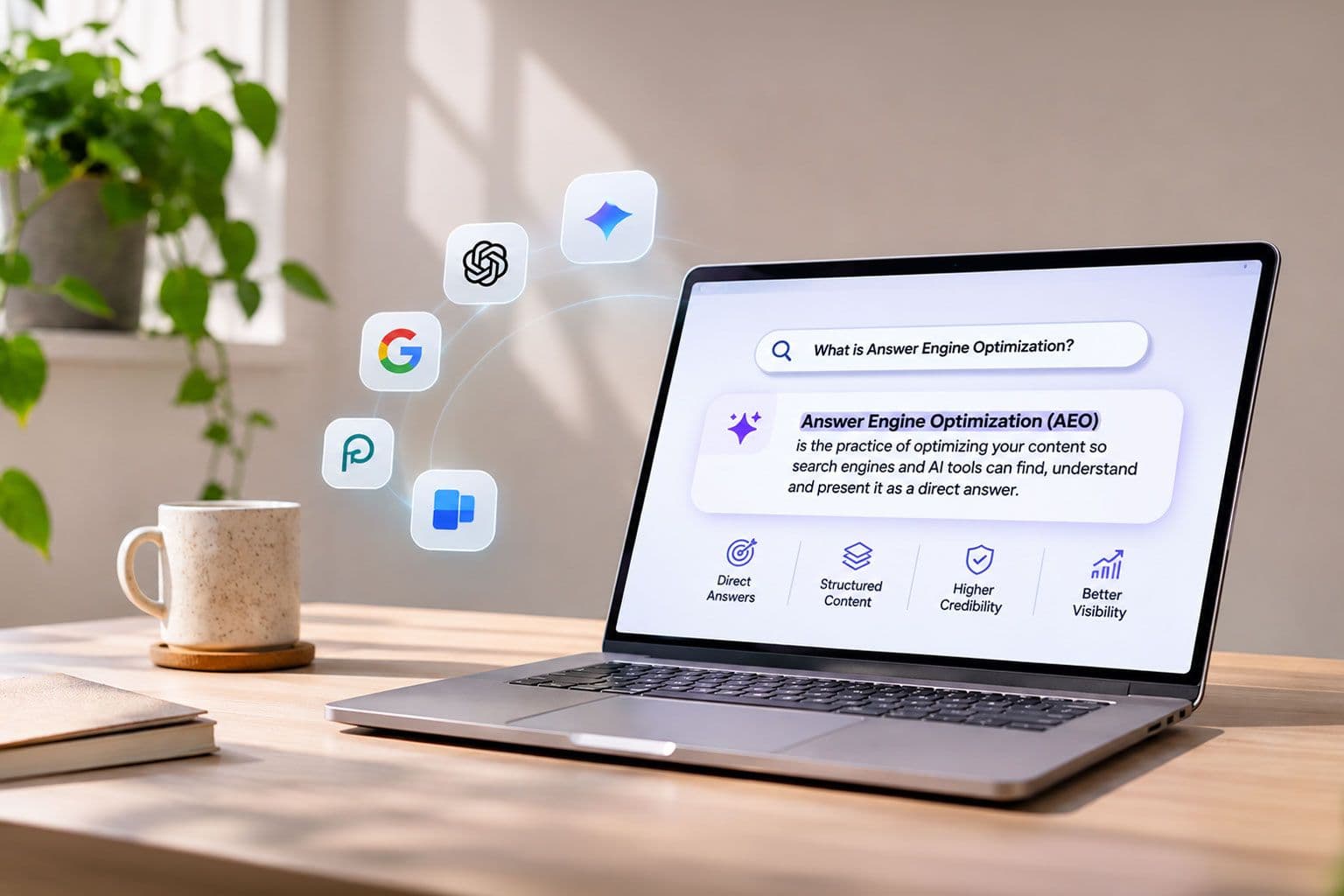
Not quite. Answer engine optimization (AEO) focuses on earning direct answers, such as featured snippets, voice responses, and answer boxes. GEO is broader and covers generative AI tools that synthesise responses from many sources. In practice, the tactics overlap heavily, and many teams treat AEO as a part of GEO.
Do You Need Both GEO and SEO?
For most businesses, yes. SEO is the foundation that makes your content discoverable and credible, and GEO extends that work to AI-driven search, where buyers increasingly start their research. Doing one without the other leaves visibility gaps.
When SEO should come first
If your site has crawl issues, thin content, or weak rankings, fix those first. GEO tactics built on a shaky foundation rarely hold up. Businesses with limited budgets should also start with search engine optimization, since it delivers measurable and compounding returns.
When GEO deserves more attention (research-heavy, high-consideration, or fast-changing industries)
GEO deserves a bigger share of effort when buyers do a lot of research before deciding. Think software, healthcare, finance, education, and professional services. In these categories, people ask detailed questions and often rely on AI summaries to compare options.
Why GEO does not replace SEO
AI tools depend on web content that search engines have already indexed and evaluated. They also still send traffic through links, and many users continue to use traditional search. GEO builds on SEO rather than replacing it.
How to Combine GEO and SEO in One Strategy
A single plan is more efficient than two separate ones. Follow these steps:
- Audit the technical and content foundation: Check crawlability, speed, indexing, and content gaps.
- Target real user questions: Use search data, customer conversations, and sales queries to find what people actually ask.
- Add direct answers and FAQ sections: Place a concise answer near the top of relevant pages, then expand with detail.
- Apply matching structured data: Use schema that reflects the visible content, such as FAQ, Organization, and Article markup.
- Build authority and brand mentions: Publish original insight, earn credible coverage, and keep your brand information consistent across the web.
- Measure and refine: Review rankings, traffic, and AI visibility regularly, then adjust.
A planned approach to content marketing helps keep steps two to five consistent across your site.
GEO vs SEO for Different Business Types
Local and service businesses
Local businesses should keep their Google Business Profile accurate, collect genuine reviews, and publish clear service and location pages. AI tools frequently answer "best provider near me" style questions, so consistent business details matter.
Ecommerce brands
Product pages need precise specifications, clear comparisons, and product schema. Buying guides that answer common pre-purchase questions give AI tools reliable material to quote.
B2B and SaaS companies
Long buying cycles mean prospects research heavily. Detailed comparison content, use-case pages, and clear definitions of your category help you appear in AI-generated vendor research.
Publishers and content-led sites
Publishers benefit most from original reporting, named expertise, and well-structured articles. Clear sourcing and authorship make content more citable.
Common Mistakes When Comparing GEO and SEO
- Treating GEO as a replacement for SEO
- Chasing tricks instead of building real authority
- Ignoring technical basics such as crawlability and site speed
- Expecting guaranteed AI citations, which no one can promise
- Skipping measurement because the data is imperfect
How to Measure GEO and SEO Performance
SEO metrics: rankings, organic traffic, clicks, and conversions
These remain your most reliable indicators. Track keyword rankings, organic sessions, click-through rates, and the leads or sales that organic visitors generate.
GEO metrics: brand mentions, AI citations, and referral traffic from AI tools
Monitor how often your brand appears in AI answers for your core topics, whether your pages are cited, and how much referral traffic arrives from AI platforms. Manual prompt testing across several tools, repeated monthly, gives a useful baseline.
Why tracking AI visibility is still imperfect
AI responses change between users, sessions, and updates. Tools that track them offer samples, not complete pictures. Use the data to spot direction and patterns, and avoid reading single results as proof.
How WebMaffia Can Help With SEO and GEO
WebMaffia supports businesses with SEO, content strategy, and website development, the three areas that drive both search rankings and AI visibility. If you want a clear plan for your site, you can discuss your requirements with our team.
Frequently Asked Questions About GEO vs SEO
What is the main difference between GEO and SEO?
SEO aims to rank your pages in search results and earn clicks. GEO aims to make your content understandable and trustworthy enough for AI tools to cite or mention in generated answers. One targets ranked lists, the other targets synthesised responses.
Is GEO replacing SEO?
No. GEO builds on SEO. AI tools rely on content that search engines have already crawled, indexed, and evaluated, and many people still use traditional search. The two work best together, with SEO as the foundation.
Is GEO the same as AEO?
Not exactly. AEO focuses on earning direct answers such as featured snippets and voice results. GEO covers generative AI tools that combine multiple sources into one response. The tactics overlap, and many businesses handle them within a single strategy.
Can I do GEO without SEO?
You can, but results are likely to be weak. Without crawlable pages, quality content, and credible signals, AI tools have little reason to use your material. Strong SEO gives GEO a base to work from.
How long does GEO take to show results?
There is no fixed timeline. Like SEO, it depends on your site's current authority, competition, and content quality. Many businesses see early movement within a few months, but AI citations cannot be guaranteed, so focus on steady improvement.
Is GEO worth it for small businesses?
Often, yes, particularly for local and service businesses. Clear answers, accurate business details, and helpful content cost little to improve and benefit both search and AI visibility. Start with SEO basics, then add GEO tactics.
Conclusion
GEO and SEO are different in what they target but closely linked in how they succeed. SEO makes your content discoverable and credible, and GEO extends that credibility into AI-generated answers. The key takeaway is simple: treat SEO as the foundation and GEO as the extension. If you are ready to plan both, get in touch with WebMaffia to build a strategy that fits your business.
following blog articles.