The AI Wave Is Here: Are You Riding It or Getting Crushed by It?

Your competitors are not waiting for perfect conditions. They are deploying AI across their operations right now, cutting costs, improving customer experiences, and making faster decisions while many businesses are still debating whether AI is relevant to them.
That gap is widening every quarter. And unlike most competitive gaps, this one compounds.
According to McKinsey, generative AI could add up to $4.4 trillion in annual global productivity value. IBM research shows 42% of enterprise companies have already deployed AI, with another 40% actively exploring it. The question is no longer whether AI matters. The question is whether your business will be among those capturing the advantage or among those scrambling to recover lost ground.
The AI Shift Is Bigger Than Most Businesses Realise
Previous technology cycles gave businesses a decade to adapt. AI is not following that pattern. What took five years before is now happening in twelve to eighteen months.
Here is the insight most leadership teams miss: competitive advantage no longer comes from access to technology. It comes from the speed of adoption. Every month an AI-enabled competitor operates with lower costs, faster cycles, and sharper customer intelligence is a month that gap becomes structurally harder to close.
This is not a technology discussion. It never was. It is a business strategy discussion.
Why Some Companies Are Pulling Ahead Faster Than Others
The organisations winning with AI right now did not start by selecting tools. They started by identifying the two or three business problems where better information, faster decisions, or automated execution would create the most meaningful commercial impact. Then they built toward those outcomes.
They also invested in data quality before AI deployment. AI is only as useful as the data it operates on. Companies with fragmented, inconsistent data consistently underperform on AI initiatives regardless of how sophisticated their tools are.
The companies falling behind are running disconnected pilots that never scale, waiting for internal consensus that never arrives, and treating AI as an IT department concern rather than a leadership priority.
The biggest AI risk is not choosing the wrong tool. It is treating AI as a technology initiative instead of a business initiative. Organisations that successfully scale AI start with a clear digital strategy connecting business objectives, technology adoption, and measurable growth outcomes ensuring infrastructure and growth strategy move in the same direction rather than at cross purposes.
What AI Disruption Actually Looks Like in Business
Across industries, AI is already producing measurable outcomes.
Retail: Predictive inventory systems reduce overstock and stockout costs simultaneously. Personalisation engines increase average order values and cut cart abandonment rates.
Finance: AI-driven fraud detection processes millions of transactions per second with accuracy no human team could match. Loan processing that once took days now takes hours.
Healthcare: AI diagnostic tools read imaging with specialist-level accuracy, and administrative automation recovers clinical hours lost to documentation and scheduling.
Manufacturing: Predictive maintenance cuts unplanned downtime by up to 50%, turning reactive cost centres into optimised operations.
Marketing: AI enables audience segmentation, content personalisation, and campaign optimisation at a scale that previously required teams three times larger.
The pattern is consistent. AI will not replace businesses. Businesses using AI will outperform businesses that do not. The performance gap within every industry is already visible and is accelerating.
The Rise of Generative AI for Businesses
Generative AI has expanded what is practically accessible for businesses of all sizes. Content production, research, internal reporting, customer communication, and product development cycles are all being accelerated by organisations that have deployed it thoughtfully.
The limitations are real. Generative AI performs poorly on bad data, produces inconsistent results without governance, and creates risk when deployed without human oversight in customer-facing contexts.
The real value of AI is not automation. It is better decision-making at scale. Organisations extracting durable value from generative AI combine it with strong data governance, defined workflows, and clear performance measurement. Those treating it as a content shortcut without strategic context consistently see disappointing returns and occasionally create new risks.
The Cost of Waiting
Delayed AI adoption is not a neutral position. It is a choice with compounding consequences.
Operational costs rise as AI-enabled competitors automate processes your team still handles manually.
Customer expectations shift permanently. Customers who experience AI-enhanced speed and personalisation from one provider carry that expectation everywhere, and organisations that cannot match that standard lose consideration before the sales process even begins.
Talent becomes harder to attract, as skilled professionals increasingly choose organisations with AI-enabled workflows and forward-looking leadership.
Market share erodes gradually, then quickly and recovering competitive ground costs significantly more than maintaining it would have.
How Businesses Can Adapt to AI Successfully
Successful AI adoption follows a consistent pattern across organisations that execute it well.
Start with the business problem, not the technology. Identify where better data, faster analysis, or automated execution creates the most meaningful commercial impact. Build data foundations first AI performance is capped by data quality. Run focused pilots with defined success metrics real deployment data is worth more than extended planning. Scale what works, govern what scales.
AI Readiness Framework
Leadership needs to treat AI as a board-level strategic priority assigning executive ownership and including it in planning and investment cycles, not delegating it down to a technology team.
Data readiness comes next. AI performance is capped by the quality of data feeding it, so building centralised, governed data infrastructure before scaling any AI initiative is non-negotiable.
On the technology side, most organisations benefit from a clear audit of whether their current stack is AI-compatible before committing to tools.
In marketing, the opportunity is in using AI for targeting, personalisation, and performance integration but it requires connecting data across channels rather than running isolated experiments.
Operationally, the highest-value starting point is almost always the manual processes consuming the most resource high-volume, rule-based workflows that can be mapped and automated without significant complexity.
In customer experience, AI-assisted support and behavioural personalisation reduce friction at the moments that matter most. And across all of it, AI literacy within leadership and functional teams determines how much value actually gets extracted building structured training and creating roles that combine domain expertise with AI capability is what separates organisations that scale from those that stall.
Building an AI Strategy for Your Business
An AI strategy for companies is a structured plan defining how artificial intelligence will be used to achieve specific business objectives. It covers use-case prioritisation, data readiness, technology selection, governance, talent development, and performance measurement. It is owned at the executive level and aligned with commercial priorities not technology preferences.
A practical AI strategy moves through six stages: honest assessment of current capabilities, prioritisation by impact and feasibility, focused pilot programmes with measurable outcomes, scaling of proven solutions, governance frameworks that grow alongside deployment, and continuous measurement against defined business baselines.
AI-Powered Business Automation Opportunities
The highest-value automation opportunities cluster in consistent areas across most organisations.
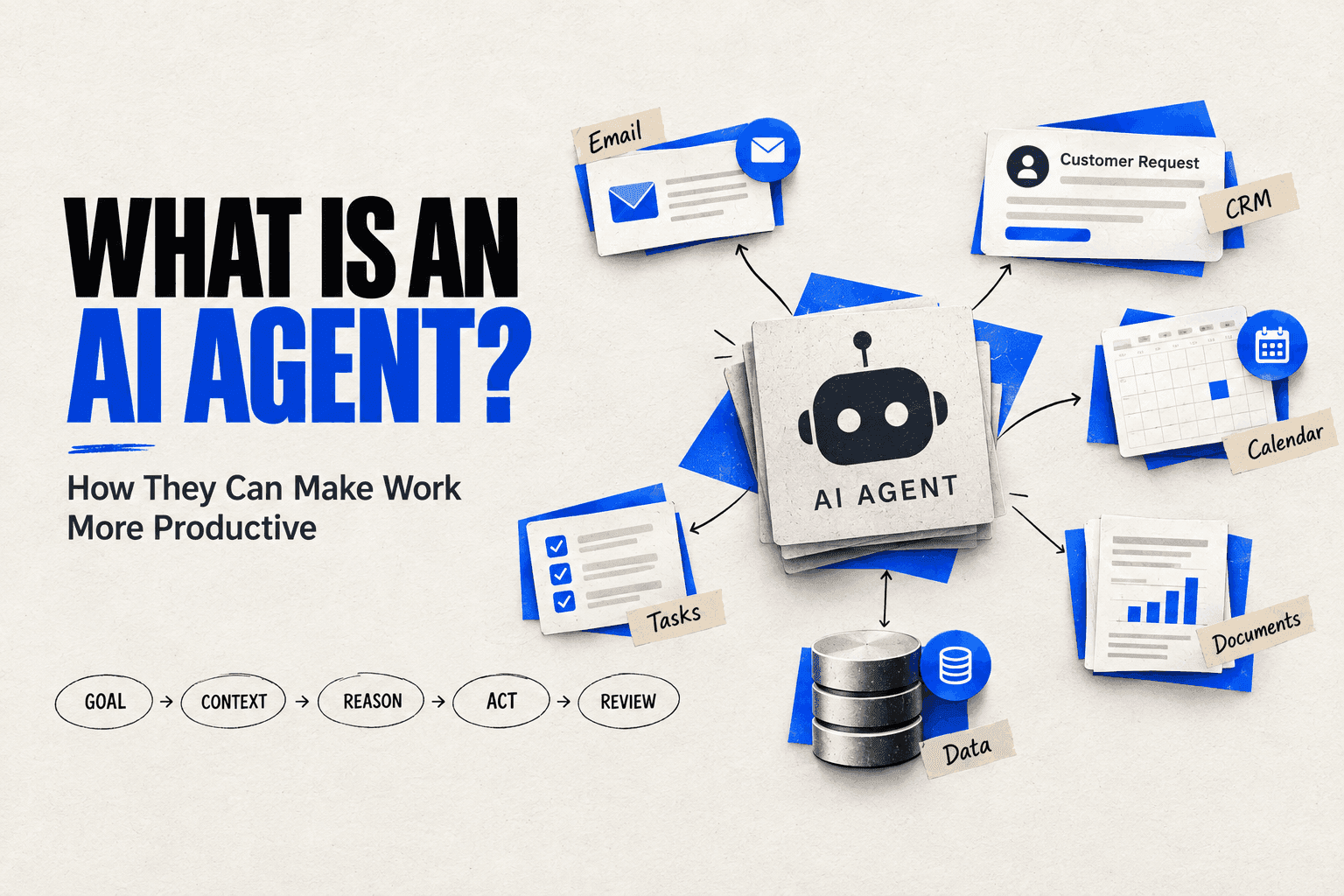
Customer support automation handles routine queries at scale and frees human agents for complex interactions.
Lead qualification uses behavioural signals to identify high-intent prospects so sales teams focus where conversion probability is highest.
Content workflow automation enables marketing teams to produce more output at higher quality without proportional team growth.
Reporting intelligence compiles multi-source data automatically and surfaces anomalies before they become significant problems.
These are not advanced applications requiring large technology budgets. Most are accessible through existing platforms with proper configuration and clear use-case definition. The key is building a strong digital foundation designed to integrate with these automation layers from the ground up, not retrofitting them onto systems built for a different era.
AI Is Changing How Customers Discover and Trust Brands
AI is not just changing how businesses operate internally. It is fundamentally changing how customers find, evaluate, and choose the businesses they buy from.
Google AI Overviews, ChatGPT recommendations, Perplexity, and other AI-powered search experiences are replacing traditional search behaviour for a growing share of queries. Users are increasingly receiving curated AI-generated answers rather than clicking through lists of links. Zero-click searches are no longer an edge case. They are becoming the norm.
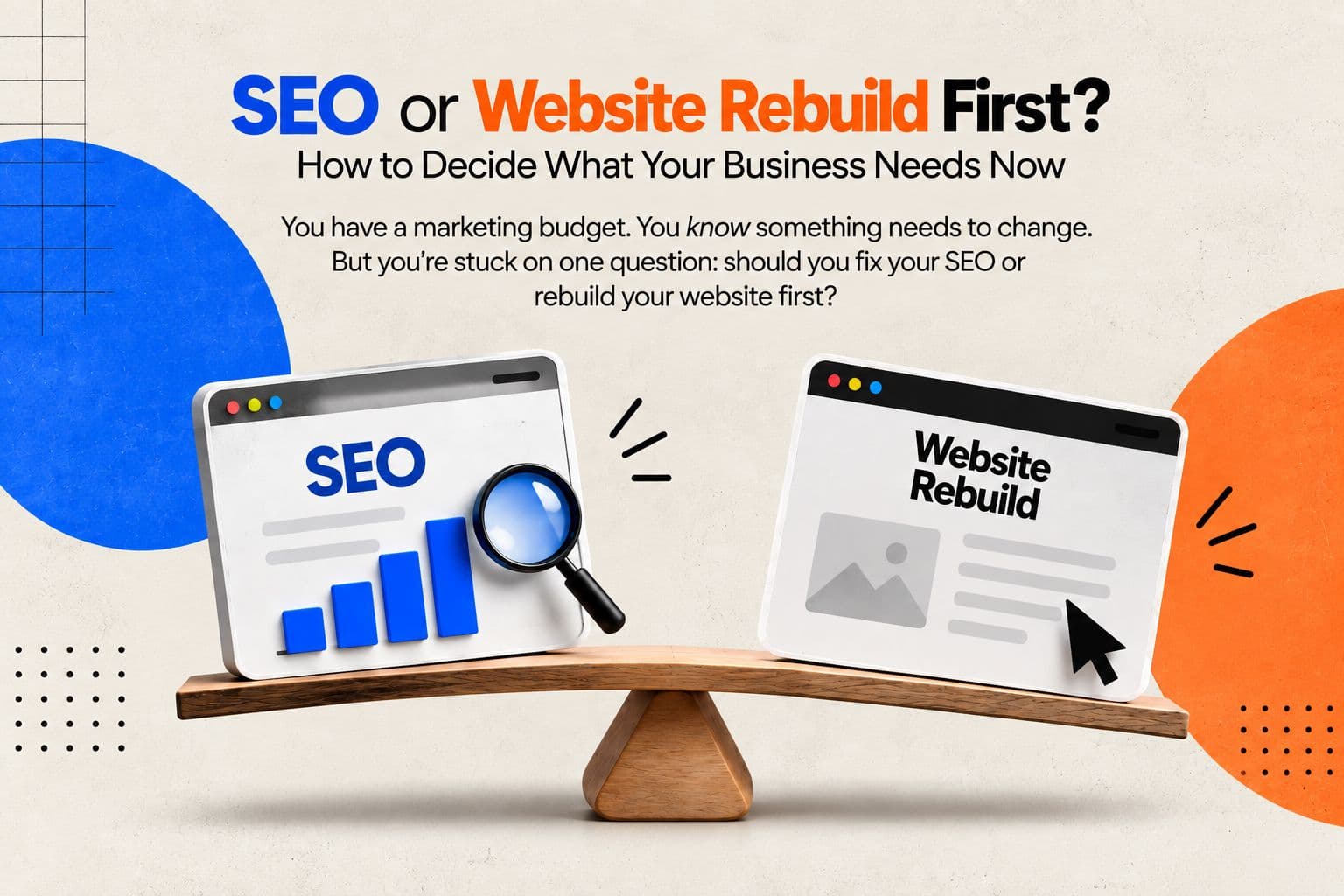
This creates a critical challenge for businesses. If your brand does not appear in AI-generated responses and recommendations, you are invisible to a growing segment of your market. AI search systems draw from content that demonstrates authority, relevance, and credibility. They favour organisations with strong SEO foundations, well-structured and genuinely useful content, authoritative websites, and consistent digital presence across channels.
Businesses investing in content quality and authority today are building visibility assets that compound in value as AI-mediated discovery grows. Those neglecting these foundations are not just losing search rankings they are losing the right to be considered at all in AI-powered search environments.
A well-executed social media presence and influencer partnerships further reinforce the brand signals that AI systems use to gauge credibility and relevance. These are not separate marketing activities they are interconnected inputs into how AI decides which brands deserve visibility.
The Role of Digital Partners in AI Transformation
AI transformation is the strategic integration of artificial intelligence across core operations, marketing, customer experience, and decision-making to improve efficiency, accelerate growth, and build competitive advantage. It requires changes in process, culture, and leadership priorities alongside technology adoption.
Most organisations benefit from working with a partner who understands both business strategy and digital execution. Technology selection without strategic clarity produces poor results. Strategic clarity without execution capability produces none.
When a business is navigating AI transformation, having a partner who understands how digital foundations, content authority, and customer acquisition strategies connect to commercial results is not a nice-to-have. It is a competitive requirement.
FAQ
Why is AI adoption important for companies?
AI adoption determines a company's ability to operate efficiently, understand customers, and compete sustainably. Companies integrating AI into core operations achieve measurable advantages in productivity, cost structure, and customer experience that compound over time and become progressively harder for slower competitors to overcome.
How long does it take to see results from AI implementation?
Focused implementations in customer support, marketing optimisation, and reporting typically show measurable results within three to six months. Broader transformation initiatives require twelve to twenty-four months for full impact. Measuring from defined baselines from the beginning is essential for maintaining leadership confidence.
Can small and mid-size businesses compete using AI?
Yes. Smaller organisations move faster and implement with less complexity. AI tools that previously required enterprise budgets are now accessible through mainstream platforms. Strategic clarity and execution discipline matter more than company size.
What is the biggest risk of delaying AI adoption?
Compounding competitive disadvantage. Every quarter competitors operate with AI advantages, the efficiency and market position gap grows larger and more expensive to close. The cost of inaction typically exceeds the cost of thoughtful implementation.
How do we identify the right AI use cases for our business?
Start by identifying the three to five business problems where better data, faster analysis, or automated execution would create the most meaningful commercial impact. Those problems not available technology should define your priorities.
What role does data quality play in AI success?
Data quality is the primary constraint on AI performance. Organisations with fragmented or poorly governed data consistently underperform on AI initiatives regardless of the tools selected. Clean, accessible, governed data is the most important prerequisite for any significant AI investment.
The Real Question Is Whether Your Organisation Will Be Ready
Five years from now, businesses will not be divided into those using AI and those that are not. They will be divided into those that adapted early and built structural advantage and those that are still trying to close a gap that grows larger every quarter.
The organisations leading their industries in 2030 are making strategic commitments today not to specific tools, but to the clarity, infrastructure, and organisational capability that make AI adoption effective and sustainable.
AI will not transform your business on its own. But a clear strategy, the right digital foundations, and a willingness to move with purpose will.
Webmaffia works across digital strategy, website development, SEO, content marketing, social media, and influencer marketing always oriented toward measurable business outcomes rather than activity metrics.
Start the conversation with a clear-eyed look at where your business is today.
following blog articles.