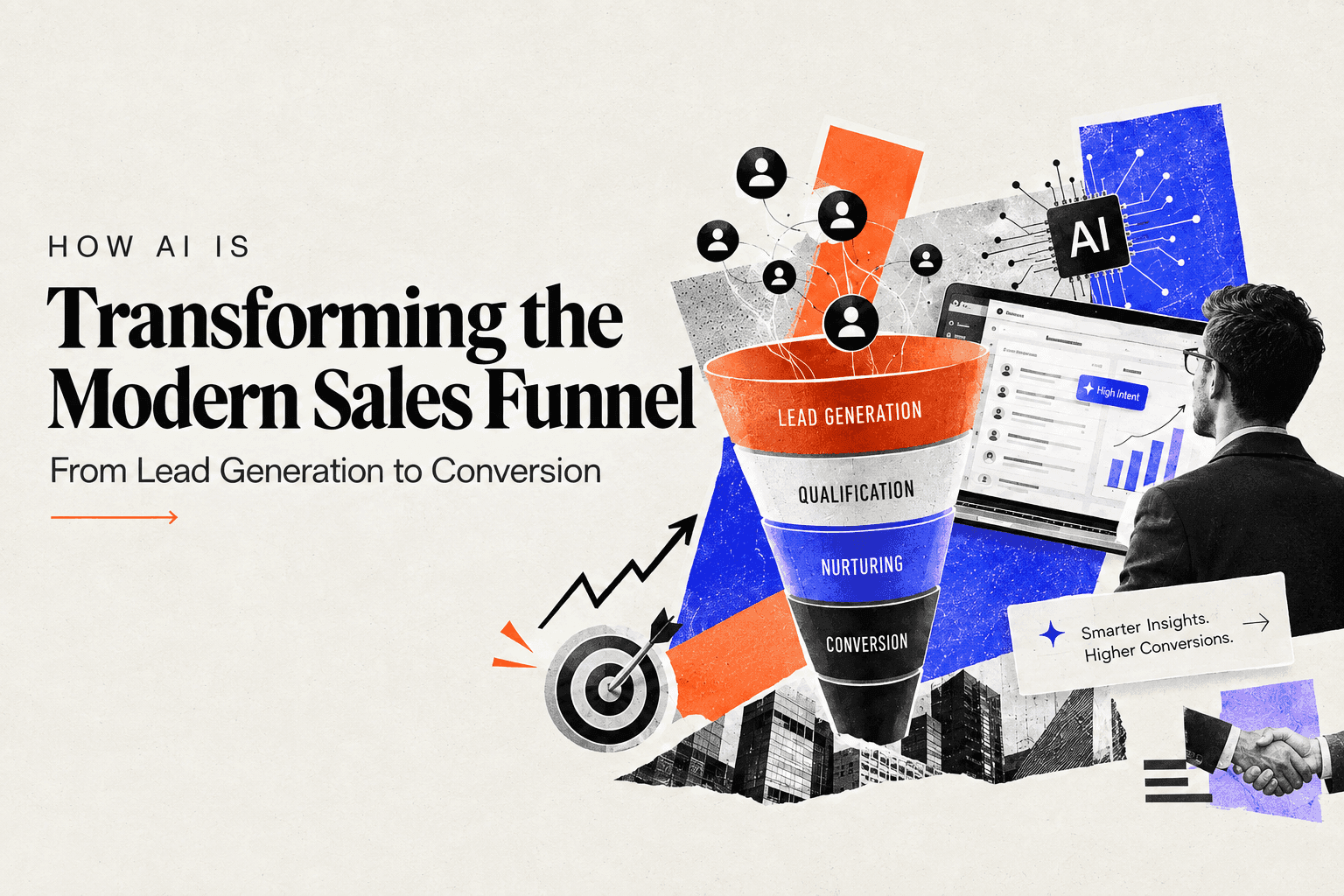
How AI Is Transforming the Modern Sales Funnel: From Lead Generation to Conversion
What Is an AI Sales Funnel?
An AI sales funnel uses artificial intelligence to help businesses attract prospects, identify promising leads, nurture relationships, and convert opportunities into customers. It combines customer data, predictive analysis, and automation to make sales processes more efficient.
The traditional sales funnel still works, but managing it manually becomes difficult as businesses grow. Marketing teams spend time finding prospects, sales representatives sort through leads, and managers rely on CRM reports to estimate future revenue. AI can help with each of these tasks, giving teams more time to focus on meaningful customer conversations.
The goal is not to replace salespeople. It is to make their work more informed, timely, and productive.
How AI Is Changing the Sales Funnel
AI is changing sales by helping businesses understand customer behavior and respond to it more effectively. It can analyze website visits, email engagement, previous purchases, and CRM records to identify patterns that may indicate buying interest.
For example, a prospect who repeatedly visits a pricing page, downloads a product guide, and requests a demo may deserve faster attention than someone who has only viewed a blog post. AI can help identify these signals and recommend the next step.
It also handles repetitive work such as updating customer records, drafting follow-up emails, and organizing sales information. This reduces administrative effort while keeping customer interactions more consistent.
However, AI recommendations are not always correct. A lead may appear highly interested but have no budget, or a promising prospect may need more time before making a decision. Human judgment remains essential, particularly for complex sales and high-value accounts.
AI-Powered Lead Generation
Lead generation is often the first place businesses can benefit from AI. Instead of relying only on broad audience targeting or manual prospect research, sales and marketing teams can use AI to identify potential customers based on relevant signals.
AI can help with:
- Finding prospects who match a business's ideal customer profile.
- Identifying high-intent website visitors through engagement patterns.
- Researching company information and relevant decision-makers.
- Analyzing intent signals that suggest a prospect is exploring a solution.
- Personalizing initial outreach and content recommendations.
Consider a B2B software company targeting mid-sized businesses. AI could identify companies that have recently increased their engagement with industry content or visited product comparison pages. The sales team can then prioritize those accounts rather than contacting every prospect in the same way.
The quality of lead generation still depends on the fundamentals. A strong digital strategy and consistent content marketing help attract relevant audiences and provide the information AI needs to identify genuine interest.
AI Lead Qualification and Scoring
Not every lead is ready for a sales conversation. AI-powered lead scoring helps teams estimate which prospects are worth pursuing first.
Traditional scoring systems assign fixed points to actions such as downloading a brochure or opening an email. AI-based models can consider several signals together, including:
- Company size, industry, and job role.
- Website engagement and content consumption.
- Previous interactions with sales representatives.
- Demo requests and visits to pricing pages.
- Patterns from past won and lost deals.
A lead's score can change as new information becomes available. This allows sales teams to focus on opportunities that appear to have both a good business fit and meaningful buying interest.
Scoring is a prioritization tool, not a guarantee of conversion. The model may miss important context, such as a change in budget or a decision-maker who has left the company. Sales representatives should use AI scores alongside their own understanding of the account.
AI Sales Engagement and Lead Nurturing
Many prospects are not ready to buy when they first contact a business. Some need more information, while others may take months to reach a decision. AI can help businesses stay relevant during this period without requiring salespeople to manage every interaction manually.
Common applications include automated follow-up sequences, personalized email content, chatbots, and recommendations for the next piece of content a prospect should see.
A chatbot, for example, can answer common questions and collect basic information before routing a qualified inquiry to a sales representative. An AI sales assistant can also summarize a customer call and prepare a follow-up draft, allowing the salesperson to review and send it quickly.
The important distinction is between useful automation and excessive automation. A prospect who receives several irrelevant emails may become less interested, regardless of how advanced the technology is. Nurturing should respond to customer needs rather than simply increase the number of messages sent.
AI-Driven Sales Conversion
At the bottom of the funnel, AI helps sales teams move from interest to a purchase decision. It can identify common objections, suggest relevant information, and recommend actions based on the opportunity's history.
For example, conversation intelligence tools can analyze sales calls to highlight questions, recurring objections, and agreed follow-up actions. AI can also assist with proposal drafts, product recommendations, and website personalization.
A business selling enterprise software might use AI to identify that a prospect is concerned about implementation time. The sales representative can then share a relevant case study or explain the onboarding process rather than sending another generic product brochure.
These tools reduce friction, but they cannot compensate for a poor product, unsuitable pricing, or a lack of trust. Conversion depends on the entire customer experience.
How AI Supports Each Stage of the Funnel
AI supports the sales funnel from the first customer interaction to the final purchase decision. At the awareness stage, it helps identify relevant audiences and personalize content. During consideration, it assists with lead scoring, nurturing, and customer engagement. At the decision stage, it supports sales conversations, proposals, and follow-up recommendations.
The process remains the same: attract the right audience, build interest, and help qualified prospects make a decision. AI makes it possible to manage more of this process with less manual effort.
Key Benefits of AI in Sales
Better Sales Efficiency
Automating routine tasks gives sales representatives more time for customer conversations, negotiations, and account management.
Faster Lead Qualification
AI can process multiple customer signals continuously, helping teams identify promising opportunities sooner.
More Relevant Customer Experiences
Personalized content and recommendations can make interactions more useful than generic messages sent to every prospect.
Improved Funnel Visibility
AI-powered analytics can reveal where leads are dropping off, which stages are taking too long, and where sales teams may need additional support.
More Informed Forecasting
By analyzing pipeline history and current deal signals, AI can help managers identify potential risks and estimate likely outcomes. Forecasts are only as reliable as the data and assumptions behind them.
AI Sales Tools for Funnel Automation
Businesses can use AI across several categories of sales technology.
AI CRM automation helps manage lead routing, customer records, follow-up reminders, and sales activity. AI lead generation tools support prospect research, audience identification, and intent analysis. AI sales engagement platforms assist with outreach, email drafting, and conversational selling. Sales analytics and forecasting tools help managers understand pipeline health, deal risks, and revenue projections.
Platforms such as Salesforce and HubSpot offer AI features within their broader CRM ecosystems. The right choice depends on the business's existing systems, sales process, and specific challenges.
Best Strategies for Improving Sales Funnel Conversion With AI
- Start with one bottleneck. Identify whether the biggest problem is lead quality, slow follow-ups, or low conversion rates.
- Clean your customer data. Inaccurate CRM records can lead to poor recommendations and unreliable forecasts.
- Connect AI with existing workflows. Sales and marketing teams should be able to use the output without switching between disconnected systems.
- Keep humans involved. Allow salespeople to review important recommendations and customer-facing communications.
- Personalize with relevant data. Use actual customer behavior and preferences rather than relying on assumptions.
- Measure business results. Track qualified leads, conversion rates, deal velocity, and revenue instead of measuring AI adoption alone.
- Test before expanding. A small pilot can reveal whether an AI workflow solves the intended problem.
Practical Applications of AI in Sales Funnels
The most useful applications vary by business model.
A B2B SaaS company might use AI to identify trial users who are actively exploring premium features and route them to a sales representative. An e-commerce business could use product recommendations to make shopping more relevant. A professional services firm might automate content delivery for prospects with long decision cycles.
A technology company could also deploy a website chatbot that answers common questions, collects lead details, and routes qualified inquiries to the right team.
These are illustrative examples rather than documented case studies. The best starting point is to examine the existing funnel and identify where AI can solve a measurable problem.
Challenges of Implementing AI in Sales
AI adoption comes with several challenges. Poor data can reduce scoring and forecasting accuracy. Connecting new tools to an existing CRM may require technical work. Privacy and security requirements must also be considered when using customer information.
There is a risk of over-automation, particularly when businesses send AI-generated messages without enough human review. Incorrect recommendations can also lead sales teams to overlook promising prospects or spend time on unsuitable ones.
Another challenge is team adoption. Sales representatives are more likely to use AI effectively when they understand how it supports their work and when the technology reduces effort rather than adding another layer of administration.
A phased implementation, clear data governance, and regular performance reviews can help manage these risks.
The Future of AI in Sales and Marketing Funnels
AI is likely to become more closely integrated with sales and marketing operations. Predictive customer journeys, conversational AI, and automated sales assistance are already developing, and businesses will continue exploring how these capabilities can improve customer acquisition.
AI may take on more responsibility for initial prospect engagement, qualification, and routine follow-ups. At the same time, complex negotiations and important customer relationships will continue to require human involvement.
The most realistic future is a collaborative one. AI handles data-heavy tasks and identifies opportunities, while sales teams provide judgment, empathy, and strategic direction.
Frequently Asked Questions
How Does AI Improve the Sales Funnel?
AI analyzes customer data, automates repetitive tasks, personalizes communication, and helps sales teams prioritize promising opportunities across the funnel.
How Does AI Help Generate and Qualify Leads?
It identifies relevant prospects through behavioral and intent signals, then estimates lead quality using engagement, company fit, and historical conversion patterns.
Can AI Increase Sales Conversions?
AI can support conversions by improving response times, recommending relevant actions, and reducing friction in the buying process. Results depend on the product, sales process, and quality of implementation.
What Are the Best AI Tools for Sales Funnel Automation?
The main categories include AI CRM automation, lead generation, sales engagement, and sales analytics tools. The right solution depends on the business's specific funnel requirements.
Conclusion
AI is changing how businesses manage the sales funnel, from finding prospects to supporting conversion and forecasting revenue. Its value comes from helping teams work with customer data more effectively, reduce repetitive tasks, and respond to buying signals.
Successful implementation requires more than adopting a new tool. Businesses need reliable data, clear processes, appropriate human oversight, and measurable goals.
For organizations evaluating how AI fits into their growth strategy, the first step is to identify where the current funnel loses time or opportunities. This assessment often connects with broader areas such as SEO, website experience, and digital strategy.
WebMaffia helps businesses evaluate their digital presence and identify practical opportunities for AI-powered growth. Get in touch to discuss your sales funnel and business goals.
following blog articles.