Zero-Click Websites: How to Win Customers When They Never Visit Your Website
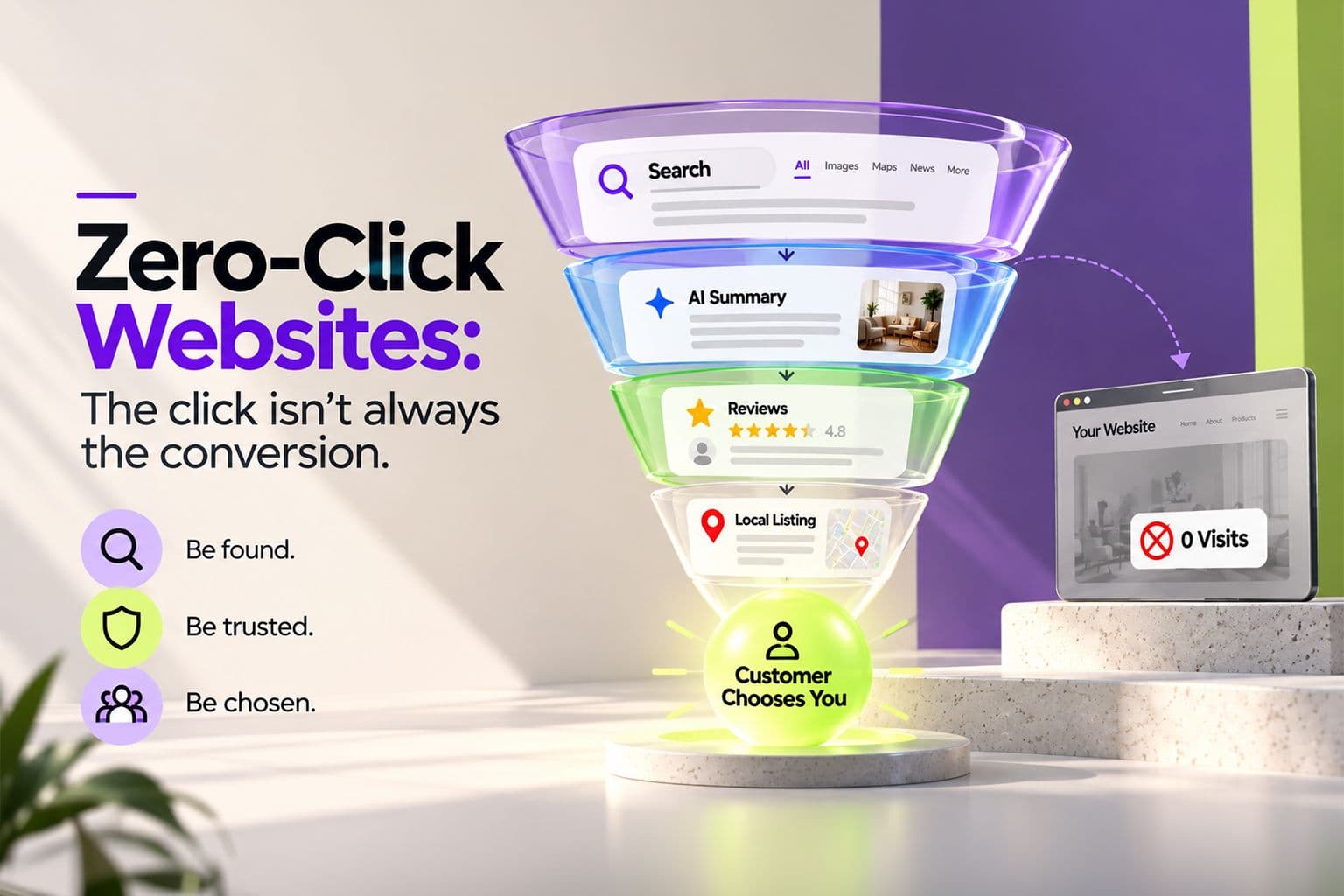
A prospect searches for your category, reads a summary on the results page, checks your reviews on a map listing and shortlists two businesses. Your website never records a visit. This is now common and it is why zero-click searches deserve a place in your growth plan.
This guide explains what they are, why they matter and how to stay visible, trusted and chosen even when the click never happens.
What Is a Zero-Click Search?
A zero-click search is a search where the user gets what they need on the search engine results page (SERP) and leaves without clicking any result. You may also hear them called no-click searches or search without clicks.
Common examples include a weather forecast, a featured snippet answering a question, business hours shown in a Google Business Profile and an AI-generated summary at the top of the page. Search engines show answers directly because many queries have a short, clear answer and users prefer speed.
Why Zero-Click Searches Matter for Businesses
For informational queries, fewer people click through, so organic traffic can fall even when interest in your category is steady. If you judge SEO only by sessions, you may misread what is happening.
Zero-click searches are not automatically bad for businesses. They become a problem only when your brand is absent from the answer. Customers often form a view before they ever reach your site. A business that appears repeatedly, with accurate details and strong reviews, enters the customer journey with trust already built.
Where Customers Discover Businesses Without Visiting Their Websites
Google Search and Featured Results
Featured snippets, People Also Ask boxes, knowledge panels and the local pack all answer questions or present business details on the SERP. A restaurant, clinic or software vendor can be discovered, compared and contacted from these elements alone.
AI Search and AI-Generated Answers
Google AI Overviews and AI assistants built on large language models summarise information from multiple sources and some cite them. Behaviour here is still evolving, so avoid bold predictions. What is safe to say is that these systems favour content that is clear, well-structured and consistently supported by trustworthy sources.
Social Media, Maps, Reviews and Marketplaces
Many buyers research on social platforms, maps, review sites and marketplaces. A strong social media marketing strategy helps your brand show up where these conversations happen, even if no one lands on your domain.
Why Your Website Still Matters in a Zero-Click World
Your website remains the one place where you control the message, the experience and the next step.
Build Trust and Brand Authority
Search engines and AI systems tend to draw on sources that demonstrate real expertise. A well-maintained site with consistent information, expert content and clear authorship supports E-E-A-T and brand authority.
Provide Information You Control
Pricing context, service details, policies and credentials need an authoritative home. Third-party platforms and AI summaries pull from that source, so inaccurate or outdated information on your site can spread widely.
Turn Interest Into Conversions
Visitors who do click often have higher intent. They have already seen your brand and want depth. The site must then deliver a fast, clear path to enquiry, booking or purchase. A well-planned website design and development approach protects your conversion rate when traffic is harder to win.
How to Optimise Your Website for Zero-Click Visibility
Create Clear, Answer-Focused Content
Start sections with a direct answer, then add depth. Use descriptive headings that mirror real questions, write concise definitions and add FAQs where customers genuinely ask them. This helps featured snippets, conversational search and AI systems understand your content.
Strengthen Your Business and Brand Information
Keep your name, address, phone number, hours and service descriptions identical across your site, Google Business Profile and directories. Inconsistency weakens local search visibility and can lead to wrong details appearing in results.
Use Structured Data and Relevant Schema
Schema markup labels your content so search engines can interpret it. Organisation, local business, FAQ, product and review schema are common starting points. Markup does not guarantee a rich result, but it removes ambiguity.
Build Reviews, Mentions and Third-Party Authority
Online reviews, brand mentions, citations and quality backlinks act as independent proof. Respond to reviews professionally, encourage satisfied customers to share feedback and earn coverage in credible industry publications. These signals shape both reputation and search visibility.
How to Give Customers a Reason to Visit Your Website
Offer Original Insights and Useful Resources
A snippet can answer a simple question, but it cannot replace original research, templates, calculators or expert analysis. A consistent content marketing strategy built around depth gives people a reason to click after the summary.
Showcase Case Studies, Results and Social Proof
Real client stories, verified testimonials and clear outcomes help a visitor move from curiosity to confidence. Only publish results you can substantiate.
Create Strong Conversion Opportunities
Make the next step obvious: a clear call to action, short forms, visible contact options and relevant offers. A visitor from a zero-click journey often arrives informed and ready to act.
What Should You Measure Beyond Website Traffic?
Clicks tell only part of the story. Track these alongside organic sessions:
- Impressions and SERP visibility in Google Search Console
- Branded search volume, which often rises as awareness grows
- Direct traffic and returning visitors
- Google Business Profile actions, such as calls, direction requests and website taps
- Review volume and sentiment
- Conversion rate and lead quality from organic visitors
- AI search visibility, checked manually by testing key questions in AI assistants and noting whether your brand is mentioned or cited
Together, these show whether your brand is being seen, remembered and chosen.
How to Build a Zero-Click Search Strategy
- Audit where you appear. Search your key queries and note which featured results, maps and AI answers include you.
- Fix your foundations. Align business information, claim your profiles and add structured data.
- Create answer-first content. Cover the questions customers ask at each stage, from informational to commercial search intent.
- Build external proof. Earn reviews, mentions and citations from credible sources.
- Design the click-worthy next step. Offer depth, proof and easy conversion on your site.
- Measure and refine. Review visibility and conversion metrics monthly, not just traffic.
A joined-up digital strategy keeps these efforts aligned rather than treating them as separate tasks.
Frequently Asked Questions About Zero-Click Searches
What is a zero-click search?
It is a search that ends on the results page because the answer is displayed there. The user does not visit a website.
Are zero-click searches bad for SEO?
Not necessarily. They can reduce clicks on simple informational queries, but they also create brand exposure. The risk is being invisible, not losing every click.
How can I optimise my website for zero-click searches?
Write clear, direct answers, keep business information consistent, add relevant schema markup and build reviews and third-party mentions. Then give visitors reasons to click, such as original insights and strong calls to action.
Does AI search increase zero-click searches?
It can, because AI-generated answers satisfy some queries on the page. The full effect varies by query type and platform and is still developing, so monitor your own data.
Is website traffic still important for SEO?
Yes. Traffic remains a key indicator of demand and a source of high-intent leads. It should now be read alongside visibility, brand and conversion metrics.
Conclusion: Your Goal Isn't Just to Get the Click
Zero-click searches change how customers find and judge businesses, but they do not remove the need for a strong website. They raise the bar: be visible wherever the answer appears, be trustworthy enough to be chosen and be compelling enough to earn the visit when it matters.
If you want to improve search visibility, refine your zero-click SEO approach and strengthen website performance, the team at WebMaffia can help through SEO services built around business outcomes. To discuss your goals, get in touch.
following blog articles.