Is Your Business Ready for AI Agents? A Practical Assessment
AI agents are quickly becoming the next competitive advantage for businesses. From customer support and sales to operations and internal workflows, companies are adopting Agentic AI to automate decisions, improve productivity, and scale faster. Gartner predicts that by 2029, agentic AI will autonomously resolve 80% of common customer service issues without human intervention. That's not a distant trend; it's already reshaping how businesses compete.
But before investing in AI, one question matters most: is your business ready for AI agents? This guide walks you through a practical readiness assessment so you can make a confident, informed decision rather than chasing a buzzword.
Why AI Agents Are Changing the Future of Business
From AI Automation to Agentic AI
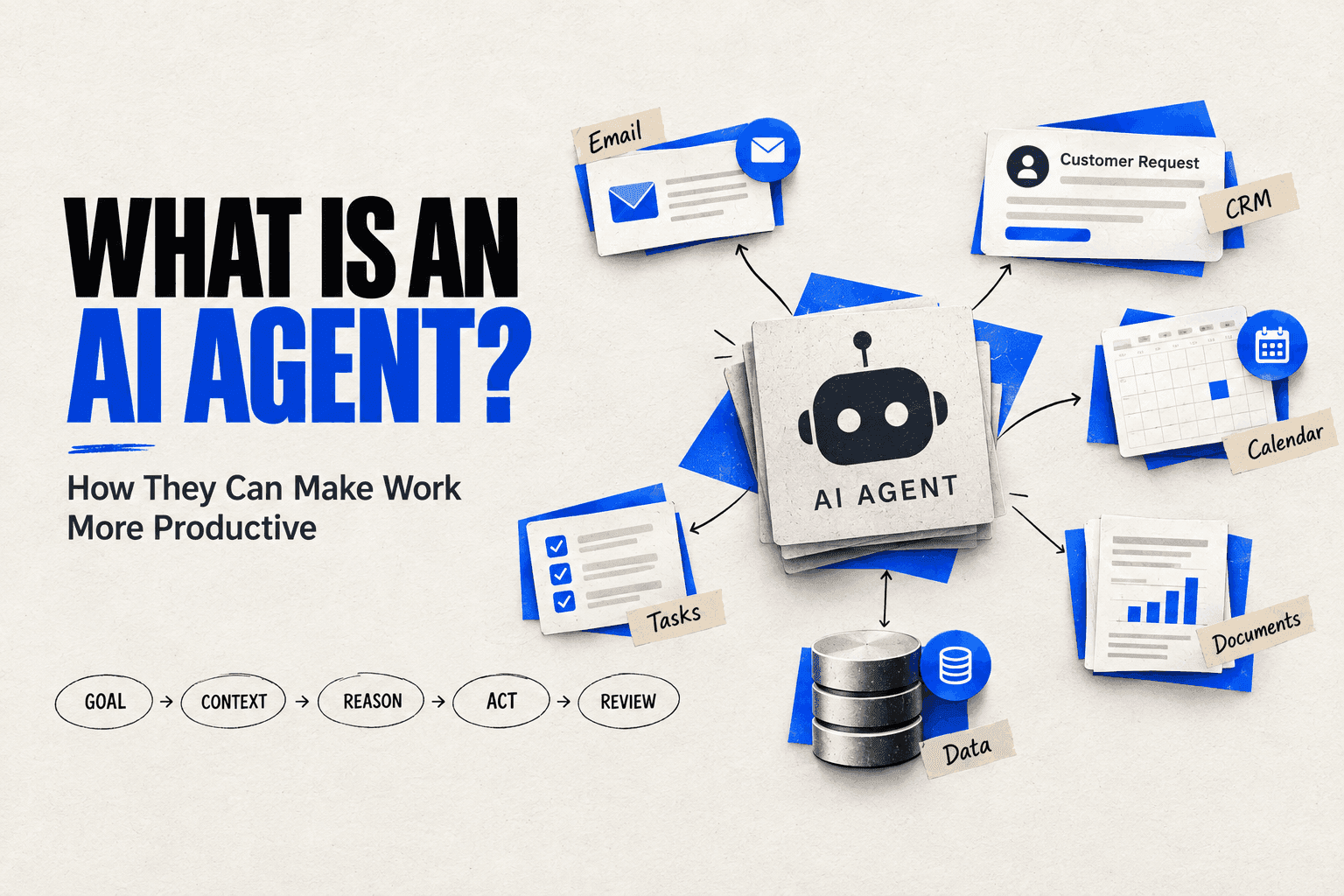
Traditional automation follows fixed rules. It executes the same task the same way, every time, with no ability to adapt. AI agents work differently. They can perceive context, make decisions, and take multi-step actions toward a goal, often with minimal human input.
This shift explains why businesses are moving away from basic rule-based automation toward AI-driven decision-making. Instead of just speeding up a task, agentic AI can analyze a situation, choose the best next step, and learn from outcomes. This is the foundation of real AI transformation and a major driver of AI productivity across departments like sales, support, and operations.
Is Your Business Ready for AI Agents? 5 Questions to Ask
Before you invest a single rupee or dollar in AI tools, run your business through this AI maturity assessment. Honest answers here will save you months of wasted effort later.
Are Your Business Processes Standardized?
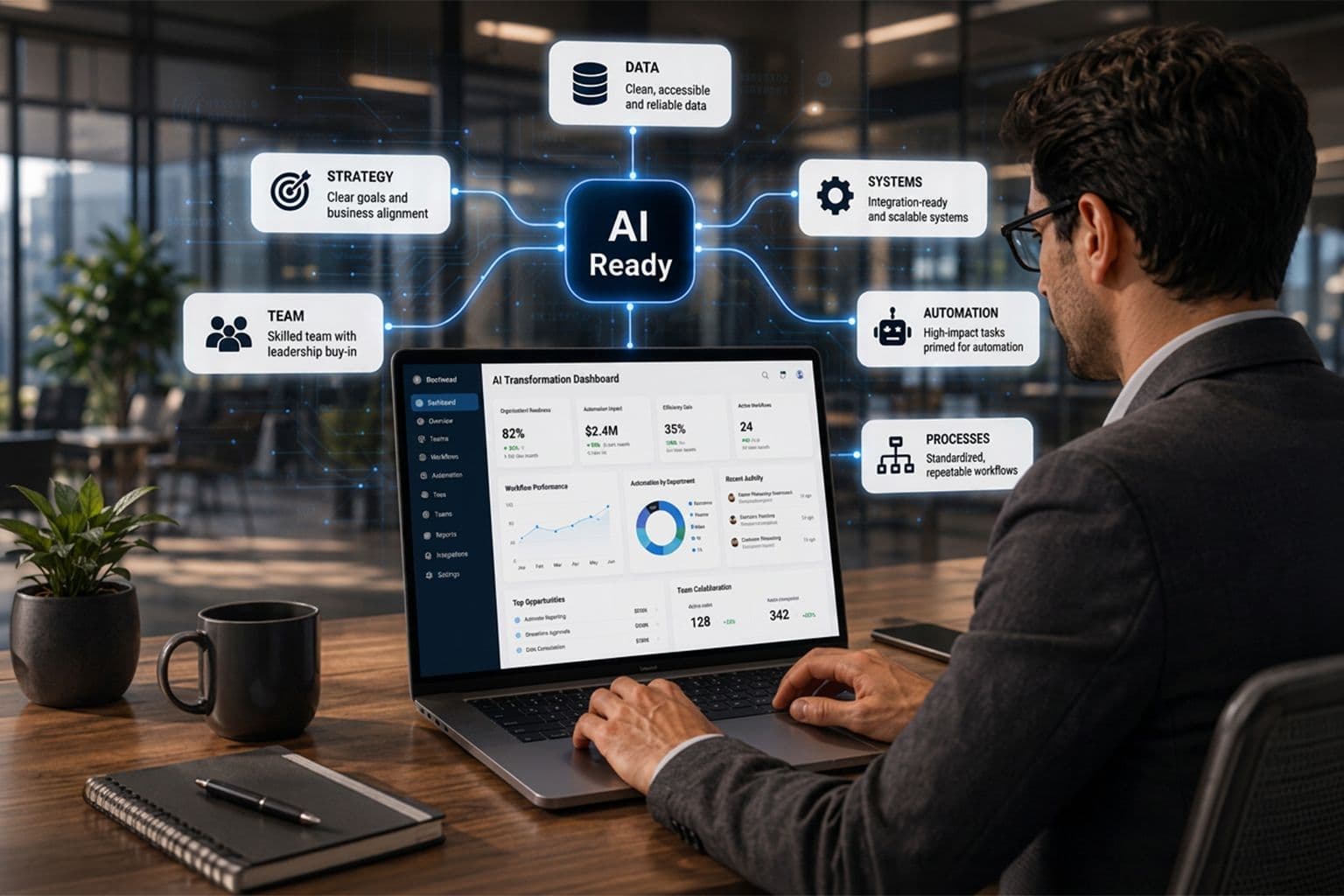
AI agents thrive on consistency. If your workflows change from person to person or department to department, an agent has nothing reliable to learn from. Document and standardize your core processes before automating them.
Is Your Data Ready for AI Implementation?
AI implementation depends on clean, structured, and accessible data. Scattered spreadsheets, outdated CRMs, or siloed systems will limit what any AI agent can actually do. Audit your data quality first.
Can AI Workflow Automation Save Significant Time?
Not every task deserves automation. Identify high-volume, repetitive, time-consuming tasks where AI workflow automation would create measurable impact, not just convenience.
Are Your Existing Systems Ready for Enterprise AI?
Enterprise AI tools need to integrate with your existing tech stack. If your software doesn't support APIs or integrations, you'll face friction before you see any results.
Do You Have a Clear Business AI Strategy?
A tool without a strategy is just a shiny distraction. A solid business AI strategy defines what success looks like, which processes to prioritize, and how you'll measure ROI.
Common Mistakes Businesses Make During AI Adoption
Many companies rush into AI adoption and stumble on the same avoidable issues:
• Implementing AI without a roadmap. Jumping straight to tools without a plan leads to fragmented, low-impact results.
• Automating broken processes. AI accelerates what already exists. If a process is inefficient, automating it just creates faster inefficiency.
• Ignoring employee adoption. Even the smartest agent fails if your team doesn't trust or use it. Training and change management matter as much as the technology.
• Poor data quality. Inconsistent or incomplete data leads to unreliable AI outputs and poor decisions.
• No success metrics. Without clear KPIs, you can't tell whether your AI automation roadmap is actually working.
Avoiding these mistakes is often the difference between AI that delivers real value and AI that just adds complexity.
AI Readiness Checklist Before You Invest
Use this scannable checklist to gauge where your business stands:
• Repeatable workflows
• Organized business data
• Integration-ready software
• High-impact repetitive tasks
• Leadership buy-in
• Defined business goals
How to score yourself:
• 5–6 Yes: You're ready to implement AI agents.
• 3–4 Yes: Build your AI foundation first.
• 0–2 Yes: Focus on digital transformation before AI adoption.
This simple AI readiness checklist gives you an honest starting point instead of guesswork, and it's a useful reference to revisit every few months as your business matures.
Where AI Agents Deliver the Biggest Business Impact
Customer Support
AI agents for customer service handle repetitive queries, resolve tickets instantly, and escalate complex issues to humans, cutting response times significantly.
Marketing Automation
AI agents for marketing automation personalize campaigns, optimize ad spend, and analyze customer behavior in real time to improve conversions.
Business Operations
From inventory management to scheduling, AI operations agents reduce manual work and minimize costly human error across daily tasks.
Internal Productivity
Agents that summarize meetings, draft reports, and manage internal requests free up employee time for higher-value, strategic work.
Frequently Asked Questions
What are AI agents for business?
AI agents for business are software systems that can perceive information, make decisions, and complete tasks autonomously, going beyond simple rule-based automation to handle complex, multi-step workflows.
How do AI agents improve business efficiency?
AI agents improve efficiency by automating repetitive tasks, reducing manual errors, speeding up response times, and allowing employees to focus on higher-value strategic work instead of routine operations.
How do AI agents differ from traditional AI automation?
Traditional automation follows fixed, predefined rules. AI agents can adapt to context, make independent decisions, and take multiple actions toward a goal without needing every step explicitly programmed.
What is an AI readiness checklist?
An AI readiness checklist is a set of criteria, such as data quality, process standardization, and leadership buy-in, used to evaluate whether a business has the foundation needed for successful AI implementation.
What are the best AI agent use cases for businesses?
The most impactful AI use cases include customer support automation, marketing personalization, operations management, and internal productivity tools like report generation and scheduling.
How do I implement AI agents in my business?
Start with a business AI implementation guide: standardize processes, clean up your data, define clear goals, choose the right use case, and pilot the solution before scaling it across the organization.
Conclusion
Successful AI implementation starts with business readiness, not just choosing the latest tools. Organizations with clear processes, quality data, and a defined AI strategy are best positioned to unlock the full value of AI agents. Before beginning your AI transformation journey, take an honest look at your current workflows and address the gaps first.
If you're unsure where to start, working with an experienced AI consulting and digital growth partner like WebMaffia can help you build the right foundation through a tailored digital strategy, efficient website design and development, and data-driven SEO, social media marketing, content marketing, and influencer marketing approach that prepares your business for AI-driven growth.
Ready to assess your AI readiness? Get in touch with WebMaffia for a free consultation and take the first step toward a smarter, AI-ready business.
following blog articles.