What Makes a Website Successful? It's More Than Design and Content

A polished homepage and well-written copy feel like proof that a website is working. They are not. A business can have an attractive site with strong content and still lose visitors, miss leads, and rank nowhere on Google. So what makes a website successful, really?
The answer sits outside the visual layer. Website success depends on how the site is experienced, found, used, and maintained: user experience, usability, SEO, accessibility, performance, a manageable CMS, security, scalability, and, ultimately, conversions. Design and content matter, but they are two inputs in a much larger system.
This article breaks down the factors that separate a website that merely looks good from one that actually delivers business results, and shows how to measure and build toward that outcome.
What Makes a Website Successful?
Website success means different things depending on who is asking. A user judges success by whether they found what they needed quickly and without friction. A business judges success by whether the site generated leads, sales, or brand trust in return for the investment made in it.
A website that looks good but loads slowly, confuses visitors, or fails to rank in search results is not effective, no matter how refined the visual design is. An effective website aligns design, usability, and content with a clear business objective, then removes every obstacle between the visitor and that objective.
The factors below cover the full picture: purpose-driven design, intuitive UX, search visibility, accessibility, performance, useful content, a manageable CMS, security and scalability, and measurable conversions.
9 Key Factors That Make a Website Successful
1. Purpose-Driven Website Design
Design decisions should trace back to a business objective and a defined audience, not personal preference. A visual hierarchy that guides the eye toward key information, consistent branding that builds trust, and calls to action placed where decisions actually happen are what separate purposeful design from decoration.
Design should support usability and conversions rather than exist purely for aesthetics. A homepage can be visually striking and still fail if the visitor cannot tell what the business does or what to do next within a few seconds of arriving.
2. Intuitive User Experience and Usability
UX determines whether visitors can find information and complete tasks with minimal effort. This includes navigation structure, information architecture, the logical flow of a user journey, form design, and the placement of CTAs.
Every additional click, unclear label, or confusing menu adds friction. Friction is the single biggest reason visitors abandon a site before converting. A user-friendly website directly influences engagement, time on site, and ultimately the conversion rate, because visitors complete actions that are easy to start and easy to finish.
3. Strong SEO and Search Visibility
An excellent website that nobody finds delivers no business value. SEO covers technical SEO, site structure, search intent alignment, crawlability, indexability, internal linking, and on-page optimisation.
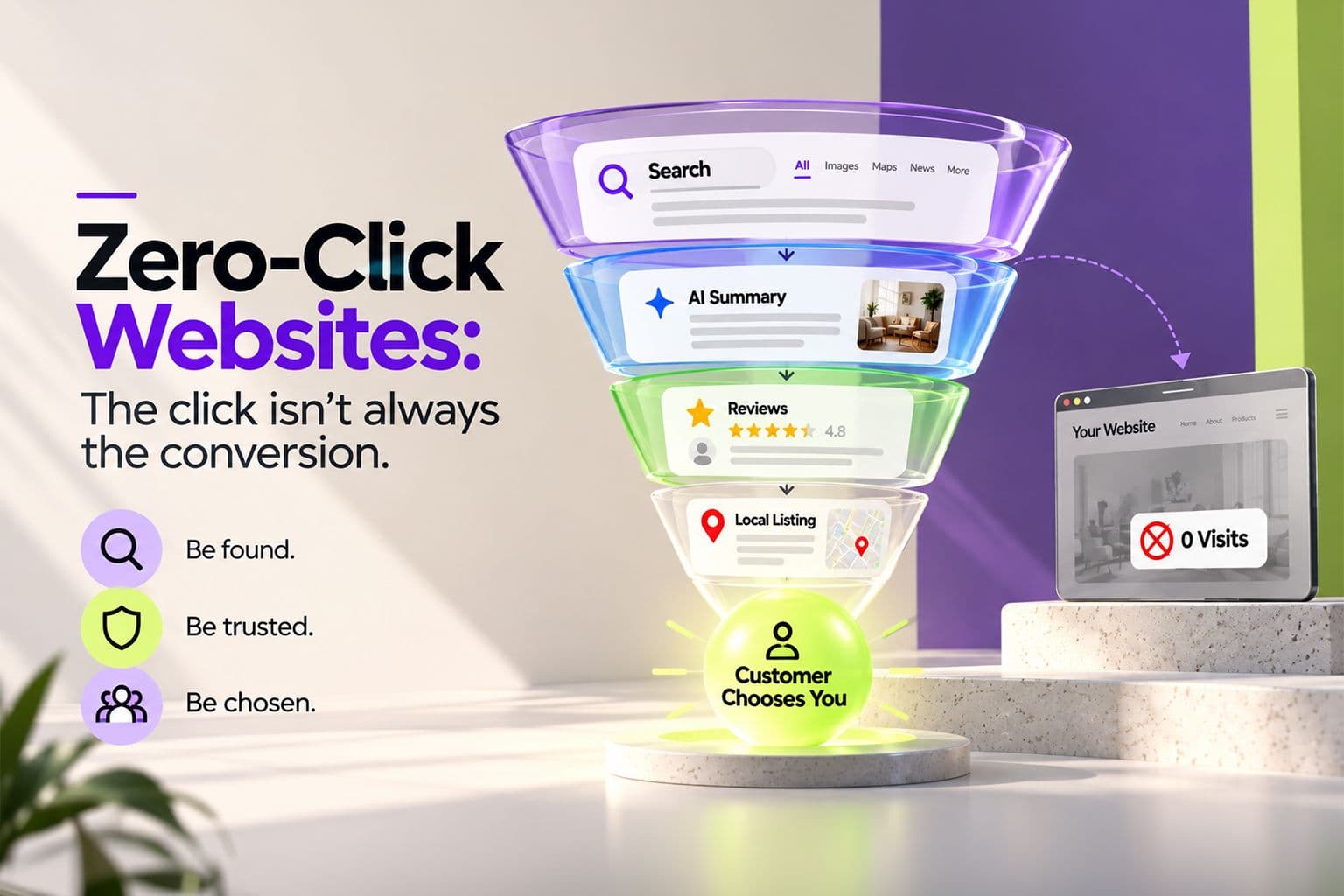
Search behaviour is also shifting. AI Overviews and AI-driven search results are changing how answers are surfaced, and websites now need to be structured clearly enough for both traditional search engines and generative search systems to understand and reference them. A search engine optimization strategy built around search intent, not just keyword volume, remains the foundation for long-term visibility.
4. Accessibility for Every User
An accessible website works for people using screen readers, keyboard-only navigation, or assistive technology, not just for users with a mouse and full vision. This means proper contrast ratios, descriptive alt text, logical heading structures, keyboard-operable navigation, and accessible form fields.
Accessibility and usability overlap more than businesses often realise. A site built to WCAG standards tends to be clearer and easier to use for everyone, not only for users with disabilities. It also reduces legal risk and widens the audience a business can genuinely serve.
5. Fast, Responsive and Reliable Performance
Website speed affects both user patience and search rankings. Core Web Vitals, mobile responsiveness, image optimisation, and general technical performance all determine whether a page loads fast enough to keep a visitor engaged.
A well-designed page that takes several seconds to load will lose visitors before they see the design at all. Performance is not a technical detail handled separately from the rest of the site; it is the layer that either supports or undermines everything else built on top of it.
6. Useful and Relevant Content
Content needs to answer the questions a visitor actually has at each stage of their decision-making process. That means clarity, relevance, credibility, and freshness, along with a structure that makes information scannable rather than buried in long paragraphs.
Good content supports SEO by matching search intent, and it supports conversions by giving visitors the confidence to act. Businesses that treat content marketing as an ongoing function, rather than a one-time writing project, tend to see stronger results because content stays aligned with changing customer questions.
7. An Easy-to-Manage CMS
Website success does not end at launch. A content management system determines how easily internal teams can update pages, publish blog posts, swap images, add case studies, and edit metadata without depending on a developer for every small change.
The right CMS depends on the business. WordPress suits many small and mid-sized businesses because of its flexibility and ecosystem. A headless CMS or enterprise CMS platform may suit organisations that need more control over how content is delivered across multiple channels. Whatever the choice, reducing unnecessary developer dependency keeps the website adaptable and the team responsive.
8. Security, Scalability and Maintainability
A website needs to remain secure and stable as a business grows. This includes regular security updates, controlled access permissions, reliable backups, consistent uptime, and integrations that do not break with every update.
Scalable website architecture allows a business to add new pages, features, markets, or third-party integrations over time without needing a full rebuild. Websites that are not built with scalability in mind often become expensive to change later, which slows the business down at exactly the point when it needs to move fast.
9. Conversion, Analytics and Business Alignment
Traffic alone does not define website success. A site can attract thousands of visitors and still fail if none of them become leads or customers. Conversion tracking, analytics, and clearly defined KPIs show whether the website is actually contributing to business outcomes.
A website should be evaluated against the same standards as any other business investment: does it generate qualified leads, support sales conversations, or strengthen brand credibility in ways that show up in the numbers. Connecting website performance to the broader digital strategy keeps the site accountable to business goals rather than treated as a static brochure.
How to Measure Website Success
User Experience and Engagement Metrics
Time on page, bounce rate, pages per session, and scroll depth indicate whether visitors are engaging with the site or leaving quickly. High bounce rates on key pages often point to a mismatch between what visitors expected and what they found.
SEO and Organic Visibility Metrics
Organic traffic, keyword rankings, click-through rate, and indexed pages show how visible the website is in search results over time. Tracking these consistently reveals whether SEO efforts are actually translating into visibility.
Conversion and Lead Generation Metrics
Conversion rate, cost per lead, form completions, and lead quality tie website activity directly to business results. These numbers matter more than raw traffic, since they measure outcomes rather than exposure.
Performance and Technical Metrics
Core Web Vitals scores, page load time, mobile usability reports, and uptime percentage reflect the technical health of the site. Poor scores here tend to quietly suppress every other metric, including rankings and conversions.
Bringing these four categories together gives a realistic picture of whether a website is delivering results or simply existing online.
Common Website Mistakes That Limit Business Growth
Focusing Too Much on Design
Prioritising visual polish over usability and clarity often produces a site that impresses briefly but underperforms where it matters, in engagement and conversions.
Ignoring Mobile and Usability
Many businesses still design primarily for desktop, even though a large share of traffic arrives on mobile devices. A site that is awkward to use on a phone loses visitors before they engage with anything else.
Treating SEO as an Afterthought
Adding SEO after a site is built, rather than during planning, usually means retrofitting structure, metadata, and content around design decisions that were never made with search visibility in mind.
Building a Website That Is Difficult to Update
A site that requires a developer for every text change or image swap discourages regular updates, which weakens both SEO and relevance over time.
Measuring Traffic Instead of Business Outcomes
Traffic is easy to track and easy to celebrate, but it says little about whether the website is actually contributing to revenue or lead generation.
These mistakes point to the same underlying issue: treating the website as a one-time design project rather than an ongoing business asset.
How to Build a Website That Supports Long-Term Business Growth
A website that supports long-term growth starts with business objectives and user needs, not a template or a list of desired pages. UX, SEO, accessibility, performance, CMS choice, security, scalability, and conversion tracking need to be planned together from the start, because each one affects the others.
Website development works best as an ongoing process rather than a one-time project. Search algorithms change, customer expectations shift, and businesses grow into new markets or add new services. A site built with scalable architecture and a manageable CMS can adapt to these changes without requiring a full rebuild every few years.
Businesses considering a redesign, a new build, or a deeper look at their current website design and development strategy tend to get the most value by starting with a clear picture of what the site needs to achieve, and working backward from there.
Frequently Asked Questions About Website Success
What makes a website successful?
A successful website combines purposeful design, intuitive usability, strong SEO, accessibility, fast performance, relevant content, an easy-to-manage CMS, and reliable security, all working toward measurable business outcomes rather than existing as a standalone design project.
What are the most important features of a successful website?
Clear navigation, fast load times, mobile responsiveness, accessible design, relevant and well-structured content, and a CMS that internal teams can manage without constant developer support are among the most important features.
Why is UX important for website success?
UX determines whether visitors can complete the actions a business needs them to take. Poor usability creates friction that drives visitors away before they convert, regardless of how strong the design or content is.
How does SEO affect website success?
SEO determines whether a website can be found in search results at all. A well-designed site with strong content still underperforms if it is not structured for search engines and, increasingly, for AI-driven search systems to understand and surface.
Why is website accessibility important for businesses?
Accessibility widens the audience a website can serve, improves usability for all visitors, and reduces legal risk. It is also increasingly expected as a standard part of professional web design rather than an optional extra.
Why does a business website need a CMS?
A CMS allows internal teams to update content, publish new pages, and manage the site without relying on developers for every change, keeping the website current and reducing long-term maintenance costs.
How do you measure whether a website is successful?
Website success is measured across engagement metrics, SEO visibility, conversion and lead generation data, and technical performance scores, viewed together rather than in isolation.
Conclusion: A Successful Website Is Built Around People and Business Goals
A successful website is never just about how it looks or what it says. It is the combined result of UX, usability, SEO, accessibility, performance, content, a manageable CMS, security, scalability, and conversion tracking, all working toward the same business goal.
The strongest websites treat these elements as connected parts of one system rather than separate checkboxes. They help users complete what they came to do, support the business with measurable outcomes, and evolve as the organisation grows.
If your current website is falling short in any of these areas, it is worth stepping back and evaluating it against these factors rather than assuming a fresh coat of design will solve the problem. WebMaffia works with businesses on exactly this kind of evaluation, from UX and SEO to CMS strategy and ongoing optimisation. You can get in touch to talk through what your website needs to work harder for your business.
following blog articles.